Rain Reigns and the Garden Rejoices

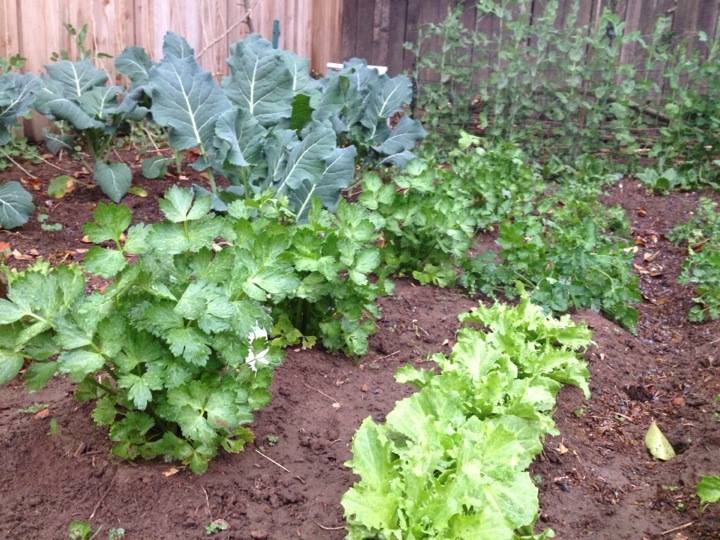
Feb garden

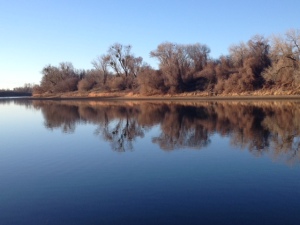
California has been in dire need for more rain and snowfall to help avert a crisis drought situation, so you can imagine how happy we’ve been to receive rain in the course of this past week.   With a 90 percent chance of more rain this weekend, we and our garden have been rejoicing.  I still intend to chant and shake my rain stick until the first of March.

Dry farming is used among a growing number of Californian farmers and vintners, and I’m inclined to put the practice into action. The Center for Agroecology and Sustainable Food Systems at UC Santa Cruz teaches dry farming techniques to students and dry farms tomatoes, winter squash, dry beans, apples, and apricots.    Allowing generous spacing and moderate irrigation after transplantation is recommended to encourage the roots of the plant to drive its roots down into the soil and is key to the success of the technique.

Still, the sound of a light and steady rain falling is music to my ears.  And the garden rejoices.

~T.

The Art of Conservation: Drought Emergency in California

Sacramento CA

A twenty percent reduction in water consumption was issued last week by Governor Jerry Brown in response to the drought emergency that has been declared for the state of California.   Being the heathen that I am, briefly showering every other day is normal for me so I doubt that I will feel imposed on if we are asked to sacrifice bathing. We’ve already begun capturing excess water to use on the garden. Numerous churches and religious leaders are hoping that prayers for precipitation will be heard and responded to, and even I have been dancing, chanting, and shaking my Native American Rain Stick everyday in hopes of a positive response from nature.

There is a risk that approximately 200,000 acres agricultural land in the Central Valley will not be planted as a result of the drought.  To further complicate the impact that a dwindling water supply is having on farmland that produces about 45 percent of the nation’s fruits and vegetables, the Sacramento-San Joaquin Delta is on the verge of collapse.  The Delta is a critical part of the state’s water supply from Silicon Valley to San Diego.   It is estimated that 30 percent of Southern California’s water supply moves across the 700,000-acre Delta, the largest estuary on the West Coast of the Americas and home to 750 distinct species of plants and animals.

Invasive species, pollution and the destruction of most of the area’s wetland and river habitat due to existing water-supply operations continue to have profound impacts on the Delta.  The natural direction of the rivers flowing out of the Delta have been reversed and as a result of water conveyance systems and other issues, several native species are on the brink of extinction.  A sustainable path forward in the Delta must be insured or the continued ecological collapse of the estuary will result in further reductions in water supply for California cities and agriculture.

There is a proposed plan to build two massive twin tunnels under the delta to divert Sacramento River water around the Bay/Delta estuary for distribution to San Joaquin Valley agribusiness and Southern California cities and suburbs.  The monetary costs could range above $69 billion, and the irreparable damage to the environment?  Astronomical.    Seems to me that there isn’t enough water in California to justify the destruction.   Are we not wise enough to realize that creating a resilient water distribution system based on recycling, conservation and the development of local supplies is more worthy of consideration?  The Environmental Water Caucus’ Responsible Exports Plan provides sustainable solutions that are more economical and less taxing on California’s rivers and bays.  The science and common sense applications that are demonstrated in the report conclude that:

…”The combination of water efficiency solutions and reduced reliance on the Delta that are recommended obviate the need for increased surface storage and increased conveyance through the Delta.  Water efficiency actions can provide California with the largest increment of future water supply that is currently available to us; the solutions will also provide ample water supplies for population growth, agricultural and industrial growth, and for improving the conditions of our natural landscapes.”

Conservation really is a work of art.  I have started a mixed media series of the Sacramento-San Joaquin River Delta and should any of the work sell, ten percent of the profit will be donated to a conservation program of the collector’s choosing.
Please leave a comment if you are interested in supporting the effort.

~T.
American River
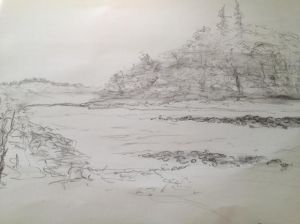
American River – Pencil on Paper – 8 x 11 ” © 2014, Theresa Funk


Tapping Into Vermont’s Liquid Currency

A dear friend and former neighbro (yes, I said neighbro) reminded me today that Vermont’s maple sugaring season will soon be starting without me.  I miss having an opportunity to barter a day of labor for the delicious magic that my friend and esteemed Sugarmaker Ken Hastings makes each year for Bread Loaf View Farm in Cornwall, Vermont.  The hard work that is expended in tapping 30 acres of one of Vermont’s finest Sugarbush makes the end product taste all the sweeter.

Pure Vermont maple syrup it is one of the most healthy sweeteners you can find.  Did you know that the Maple sap has higher counts of manganese, riboflavin, zinc, and magnesium than white cane sugar, brown sugar, corn syrup or honey?

If you’ve ever had the pleasure of visiting a working sugar house during syrup production, you have an idea of the work and precision that is involved in the process. Sugar on Snow and Open House events occur typically in March to coincide with the peak of the season.   It is an authentic and delectable taste of Vermont agricultural history that I am grateful to have experienced.

trees-buckets

And yes, I’d tap that!

~T.

A Song for the New Year

Being laid off for the last six weeks in 2013 threw me into a slight depression, and I exerted a lot of energy countering the negative internal dialogue with an optimistic outlook for 2014.   Joan Baez advised that the antidote to despair is action, so I am taking action every day to find a means of income beyond the $300 a week that unemployment insurance currently affords me.   Without the love and support of my partner, I would very likely be in a much darker emotional place which would, with time, surely defeat me.

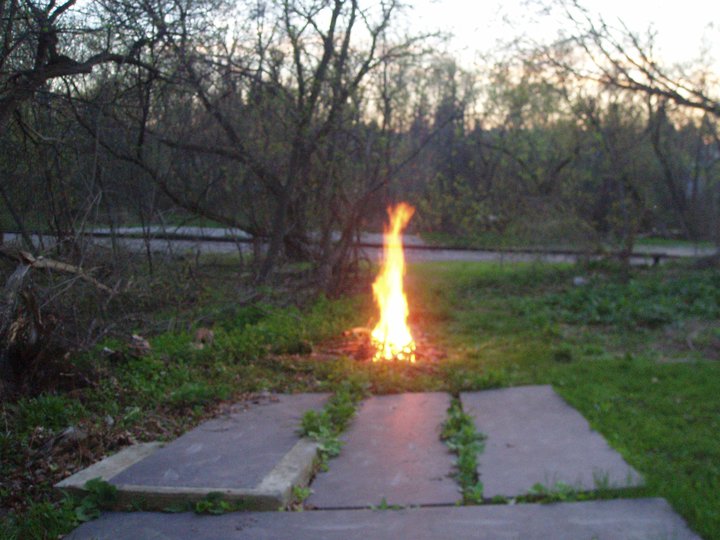
This morning, I reflected on The Flame, a song that I wrote in 2011. Reading the lyrics helped me to move away from the negative and doubtful thoughts that I almost allowed to infiltrate my positive attitude today, and inspires me to sing a song of sustainable hope for the world in the new year.  May your new year be filled with more light, love, and well being.

The Flame
©2011 Theresa Funk.  All rights reserved.

Where you are going will be where you’ve been.
Its all the same place in the end.
Words spoken are ideas uttered,
sometimes in vain and then forgotten.

But sometimes,
they make a connection
and need no clarification.

If one
small
push
puts you over,
let one good turn lead you to another.

One chance is all life requires
and one dream
can be inspired by the
one spark that catches another,
and that spark will feed
the fire’s flame.

flame

~T.

American Ninja Terrier: Big Adventures of a Little Dog

Image

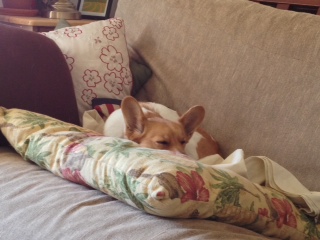
When asked what breed of dog Stella is, I often answer that she is an American Ninja Terrier.  The American Kennel Club doesn’t include this rare breed of domesticated wild canine on their list of dog breeds, but I don’t let that stop me from using the name to aptly describe her.

Why do I call her an American Ninja Terrier?  Firstly, she’s American.   Secondly, she’s stealthy like a Ninja and twice as fast.  Thirdly, I like the ease in which American Ninja Terrier rolls off the tongue as opposed to Rat Terrier Basenji mix.

In the latter half of the 19th century, Basenjis were re-discovered in their original habitat – the headwaters of both the Nile and the Congo, in the heart of Africa. There, they are the hunting dogs of native tribes and so highly esteemed that they are regarded as having equal rights with their masters.   Stella has proven her ability to successfully hunt, kill, and consume small rodents with ferocity.   Because of her hunting nature and ability to run at high speeds for long distances, every outing with her requires that we keep her on a leash.

Beach

To date, Stella’s big adventures have spanned nineteen states: Tennessee, Kentucky, New York, Vermont, New Hampshire, Massachusetts, Rhode Island, Connecticut, Pennsylvania, Maryland, West Virginia, Ohio, Indiana, Illinois, Missouri, Kansas, Colorado, Nevada, and California.  When she isn’t on an actual adventure, she’s probably dreaming about the next one.

photo (9)

~T.

Ellis Island: A Poem for Guitar

Ellis Island

I spent an afternoon on Ellis Island a few years ago and was deeply moved by the experience.  Millions of individuals arrived and were processed on the nearly 28 acre island between 1892 and 1954, each with a unique circumstance and history.  Truly astounding when you think about the scope of it.
The Statue of Liberty Ellis Island Foundation has a free searchable online database that you might find interesting and informative.   More remarkable is a visit to the Island.   It certainly changed my perception and attitude about feeling inconvenienced by travel delays.  Chances are, I’m going to arrive at my destination alive (many people died en-route to America) and it isn’t going to take me a month or more to get there.  Think about that the next time you feel yourself getting annoyed because your train is late, or you are stuck in traffic.

An untitled poem that I wrote in 2001 was penned as part of a writing exercise for a dream workshop I had taken at Middlebury College.   Our task was to piece something together from the collective sharing of words and phrases that we derived from the dream recitations of class participants.   I didn’t know what the poem was about or that it had a title until I stepped through the doors of the Great Hall that day in March of 2009.

Ellis Island 

© 2001 Theresa Funk

There were photographs in black and white,
and fingerprints.

Lines infused with a memory,
and I am skating through a strangers dream.

Sixteen lines,
half of them are disconnected.
But a theme was tied by the threads
of celluloid on paper.

I see you standing in a drove of noiseless people.

You are waiting on a line while
on the other side,
my skate-shoes glide.

~T.

The Healing Power of Art

The Foundation for Art and Healing is an organization that was founded to  perpetuate general awareness about the healing power of art.   Ongoing research about how engagement with the creative processes impacts the likelihood of recovery from disease and traumatic events is compelling, and the Foundation’s aim is to convey the knowledge about the relationship between art and healing and provide active and ongoing support to communities and individuals.

Whether it is expressive writing, music, movement or visual arts, all share the ability to change people’s perspectives, moods, and overall health.   In 1860, Florence Nightingale wrote about the effect of “beautiful objects” on sickness and recovery. “Little as we know about the way in which we are affected by form, by color and light, we do know this, that they have an actual physical effect.”  Creating art stimulates our neurology, and that stimulation makes us feel good.

The healing power of art was evident to me long before the concept was popularized.  My self-directed art education and healing practice started at the age of six when, out of a need to find refuge from the bouts of domestic violence that occurred in our home, I would hide in a closet with paper, pencils, and crayons to create art.

Today, watercolor, pencil, and charcoal are the primary medium that I work with to create contemporary landscape images on paper.  I am inspired by the scenery of places that I’ve actually visited, or photographs of places or objects that elicit an emotional response. That spark of emotion is what starts the authentic creative process for me and also influences the colors that I select for each of my paintings.

Addison County

October Hillside – 11″x 13″ watercolor on mixed media paper. © 2013 Theresa Funk

Beautiful Buttes

Sutter Buttes

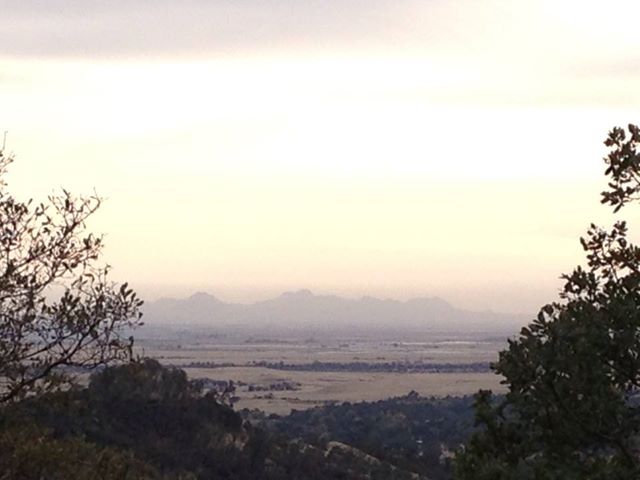
We stopped to take in a view of  the Sutter Buttes today, but they were barely visible through the agricultural dust from the Great Valley of central California.  Also known as the  “smallest mountain range in the world,” the Buttes rise about 2,000 feet above the fields of walnut, rice, almond, and other crops that abundantly grow in the central California region.

Access to the Buttes is extremely limited, but easements have been granted as part of land trust agreements that make guided, educational hikes possible.  The Sutter Buttes Regional Land Trust  continues its mission to protect and preserve the Buttes and surrounding lands for years to come.  I intend to participate in an interpretive hike and take in the full beauty of the Buttes more intimately.

Until then, I enjoy the views of the small circular complex of eroded volcanic lava domes from a distance.
~T.

Excellent Birds

California is a stopover  on the Pacific Flyway, a major route for the millions of birds that migrate from Alaska to Patagonia.  My visit to the Gray Lodge Wildlife Area near Colusa, California last year was an incredible sight to behold, and an experience worth repeating.

The Migratory Bird Conservation Partnership seeks to protect, restore, and enhance lands that support bird populations in California.  It is estimated that Less than 10% of the state’s original wetland habitat remains today, and the threat of losing more habitat persists.  The Partnership is working hard to preserve and enhance the places where these birds  rest, feed, and breed  in an attempt to reverse the declines that many of these populations have been experiencing.   I do my best to support worthy causes by donating time or money, and sometimes both.    Regardless of how much or little that I give, the intention is always sincerely appreciated.

~T

They arrive by the thousands and drop from the sky,

landing in groups of two, three, or six sometimes and all at oncce.

A Pintail circles around another,

one other takes to flight.

A cloud of Snow Geese grace

the liquid surface of the world.

The sound of wings uplifting is like a sudden burst of inexhaustible joy.

Colusa

©2012 Theresa Funk

Full Moon Heart and Peter Mulvey

Full Moon Heart was an acoustic quartet that was formed as a result of a weekly music jam in Waitsfield, Vermont.   There were some gifted musicians that used to come to my band mate’s woodworking shop, and I am very fortunate to have had the chance to  have created music with them.    The jam sessions were very casual and relatively small in the beginning;  a few guitars, mandolin, upright bass, banjo, and on special occasion, a drummer and tin whistle player.   Eventually, the jam got quite large, and a few of us decided to regroup so that the original songs that I and another band mate were writing could be further developed.

From those sessions, a weekend gig at a local tavern manifested, followed by open mic nights and various other musical festivals in and around the state.  It was at the Falcon Ridge Folk Festival in 1995 that I first heard Peter Mulvey play, and I have been a fan of his music ever since.  I used to be able to see his shows when he would come to Vermont, but have not seen him perform in over two years.

Peter is playing in Berkley, California this Saturday, October 19th at the Freight and Salvage but I am, regrettably, not going to be able to make it, and neither will Full Moon Heart.   Instead of making a solo, 4 hour round trip drive to catch his show, I’ll buy his latest CD to add to my collection.   He is a remarkable musician, storyteller, and philanthropist.  Give him a listen if you get the chance.  Better yet, watch and hear him play his magic in a live show whenever he’s in a town near you.
http://www.petermulvey.com

~T