Sacramento County: A Passing Shot

Passing Shot

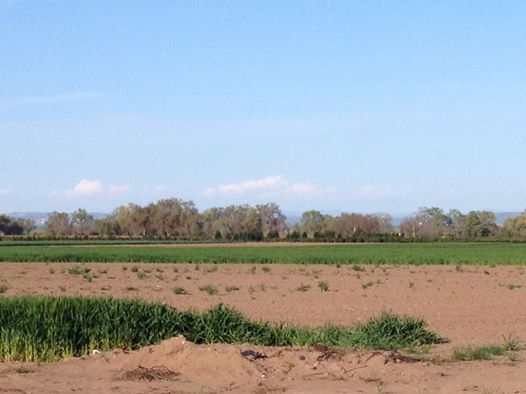
This photo was taken with my mobile device while travelling through Sacramento County California at sixty miles per hour from the passenger seat of a car.  I like to take Passing shots between site locations for my Conservation Art series to help inform color, composition, and brush selection. Rain is in the forecast for the next two days, so I am prepared for strokes of burnt umbra between each downpour.

© 2014 Theresa Funk, all rights reserved.

The Essence of Place: Maidu’s Spirit Mountain

The Essence of Place: Maidu's Spirit Mountain

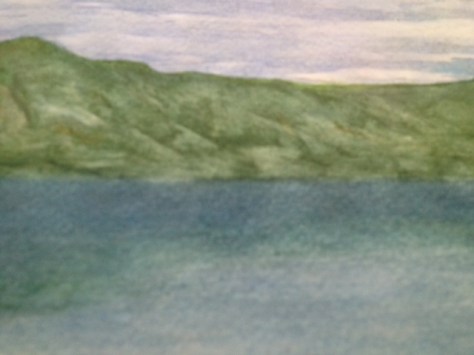
The painting I have been creating to give as a house-warming gift is nearing completion and will soon travel from my home studio in California to Charlie and Eileen’s new home in Hinesburg, Vermont.
Capturing the essence of a place can’t be done in just one painting, so I look forward to returning to create more studies.

~T

Sutter County, California, 8″ x 10″ water and color on paper. © 2014, Theresa Funk, all rights reserved.

Hard Rain

Hard Rain

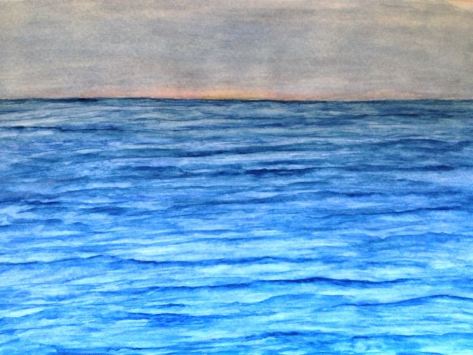
Intermittent downpours in the last week of February 2014 have been good for the garden, California, and the water supply for my Conservation Art series.
It has not been so great for my golf game.

© 2014 Theresa Funk, All rights reserved.

Conservation Art and the Art of Conservation

Image

In response to California’s severe drought, we’ve been doing our part to conserve and reduce our daily amount of water use.  Despite recent days of rain and snow in the higher elevations, we are reminded to be mindful of our water consumption habits.  Conservation of resources has always been a standard operating procedure for me, so I’ve not had to drastically modify my habits. 

During our most recent rainstorm, I set out pots and containers and collected water for use in my conservation art series.  We will need many more days of rain if I am going to accomplish my goal of completing the 100 piece series by May.  

~T. 


The Healing Power of Art

The Foundation for Art and Healing is an organization that was founded to  perpetuate general awareness about the healing power of art.   Ongoing research about how engagement with the creative processes impacts the likelihood of recovery from disease and traumatic events is compelling, and the Foundation’s aim is to convey the knowledge about the relationship between art and healing and provide active and ongoing support to communities and individuals.

Whether it is expressive writing, music, movement or visual arts, all share the ability to change people’s perspectives, moods, and overall health.   In 1860, Florence Nightingale wrote about the effect of “beautiful objects” on sickness and recovery. “Little as we know about the way in which we are affected by form, by color and light, we do know this, that they have an actual physical effect.”  Creating art stimulates our neurology, and that stimulation makes us feel good.

The healing power of art was evident to me long before the concept was popularized.  My self-directed art education and healing practice started at the age of six when, out of a need to find refuge from the bouts of domestic violence that occurred in our home, I would hide in a closet with paper, pencils, and crayons to create art.

Today, watercolor, pencil, and charcoal are the primary medium that I work with to create contemporary landscape images on paper.  I am inspired by the scenery of places that I’ve actually visited, or photographs of places or objects that elicit an emotional response. That spark of emotion is what starts the authentic creative process for me and also influences the colors that I select for each of my paintings.

Addison County

October Hillside – 11″x 13″ watercolor on mixed media paper. © 2013 Theresa Funk

Water and Color on Paper

Water and Color on Paper

The time I spend in the garden is equally divided between gardening, play and training with Stella, and artistic expression. In addition to hydrating and harvesting vegetables today, I painted a gift for my partner.

Original watercolor on paper from my California Series, copyright 2013.

~T.

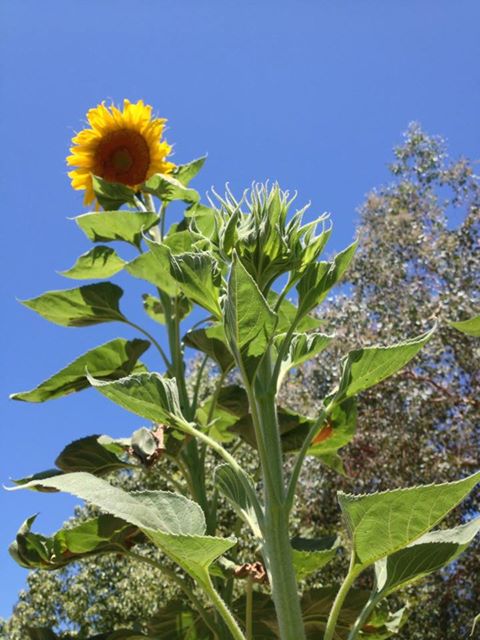
American Russian Sunflowers

Sunflower 1

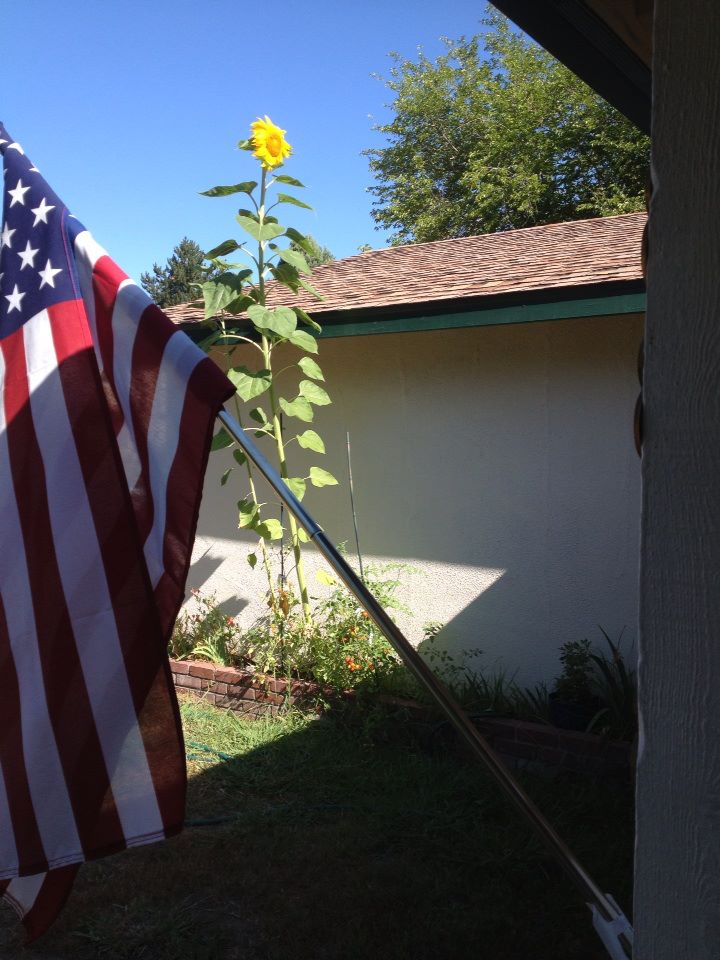
Wild sunflowers are  native to North America and were a common crop among American Indian tribes but commercialization of the plant took place in Russia.  The Russian Sunflower seeds that we planted in the spring are among the tallest flowers currently growing in our neighborhood.  To date, the tallest flower that has graced our landscape measured approximately 14 feet, give or take an inch.

sunflowers\

~T.

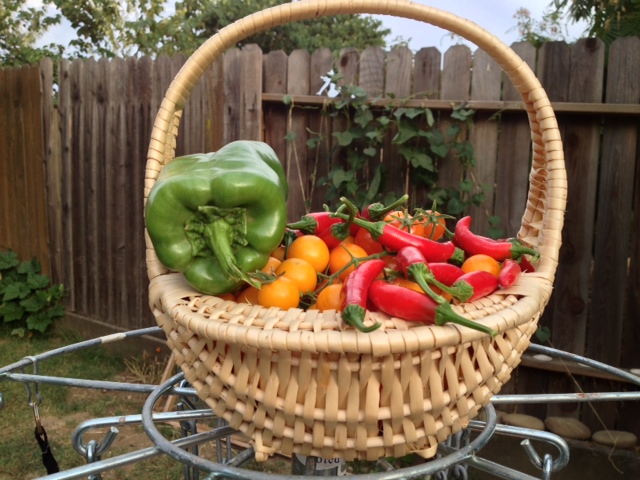
Last Night’s Garden Harvest

There are numerous gardening guides and tips about harvesting fruits and vegetables that you may reference if you have questions about when and how to reap what you’ve sown.  Planting, growing, and harvesting your garden is dependent on where you live but there is, most likely, an agricultural extension office and Website that can provide you with loads of appropriate information for the region in which you live.  

My current favorite resource comes courtesy of the UC Davis Master Gardening Program: http://cagardenweb.ucdavis.edu/

My instincts and eyesight are usually reliable enough to ensure that I’m harvesting only those vegetables and fruits that have fully matured, and I typically prefer to pick them in the early morning hours between six and nine a.m. 

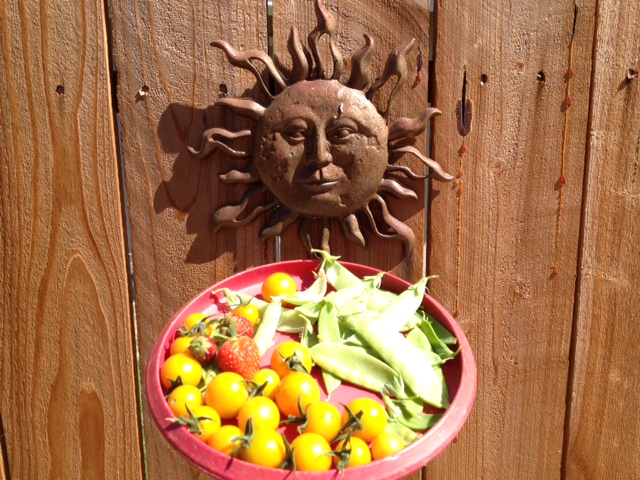
I had to wait until late in the day to harvest last night’s garden treasures but their taste and vibrancy were not adversely affected.Image

~T.


Lycopene

Lycopene

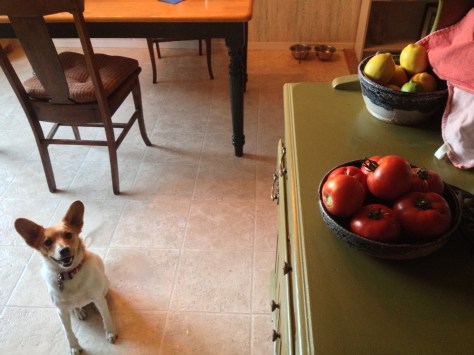
Lycopene is a naturally occurring chemical that gives fruits and vegetables a red color. As you can tell by the photo, our tomatoes are loaded with the stuff. According to the American Cancer Society, a major claim for lycopene’s benefits is in the prevention and treatment of cancers of the lung, prostate, stomach, bladder, cervix, skin, and, especially, prostate. In support of these claims regarding cancer, proponents note that lycopene is a powerful antioxidant, a compound that blocks the action of free radicals, activated oxygen molecules that can damage cells, and that several scientific studies have found lower risk of cancer among people who eat lycopene-rich foods.

The bowl of tomatoes were grown in our garden, and we continue to harvest and eat them daily. With the triple digit heat that is expected to last until the 4th of July, I anticipate that we’ll be eating more of these lycopene rich fruits on a daily basis.
~T.