The Essence of Place: Maidu’s Spirit Mountain

The Essence of Place: Maidu's Spirit Mountain

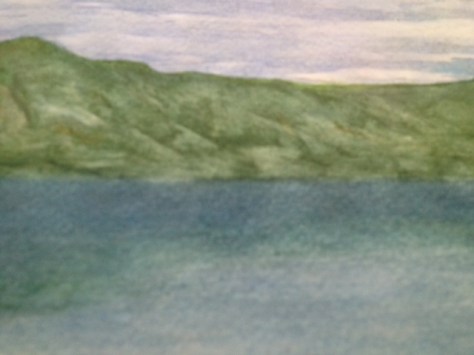
The painting I have been creating to give as a house-warming gift is nearing completion and will soon travel from my home studio in California to Charlie and Eileen’s new home in Hinesburg, Vermont.
Capturing the essence of a place can’t be done in just one painting, so I look forward to returning to create more studies.

~T

Sutter County, California, 8″ x 10″ water and color on paper. © 2014, Theresa Funk, all rights reserved.

Hot Dogs, Cold Shoulder

Hot Dogs, Cold Shoulder

Buddy lives next door and we often invite him over for playtime with Stella. They have great fun getting their dog on together, and I love capturing snapshots that reveal the special relationship that they share.

© 2014 Theresa Funk. All rights reserved.

Art Garden Art

Art Garden Art

Blue sky and windless days are optimal for making art in the garden.
My paint brushes soak in rain water while Addison County Vermont dries in the California sun.

Addison County Vermont, 13″ x 11″ pastel and watercolor on mixed media paper © 2014 Theresa Funk, All Rights Reserved.

Gigantic Organic and Pesticide Free

Gigantic Organic and Pesticide Free

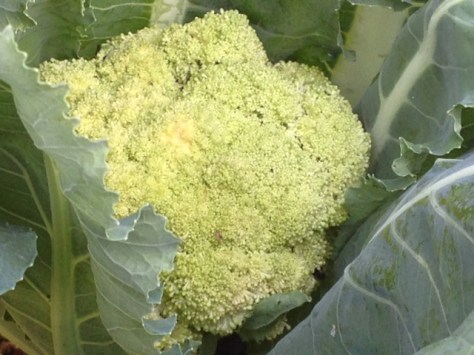
We opted to grill asparagus for tonight’s side dish so that this head of garden fresh Romanesco Broccoli will have one more day to grow genetically un-modified, and pesticide free.
Trying to convey to you with words what only functioning taste buds can convey is futile.
Dinner will be served at 7:00 p.m. PST.

~T.

Hard Rain

Hard Rain

Intermittent downpours in the last week of February 2014 have been good for the garden, California, and the water supply for my Conservation Art series.
It has not been so great for my golf game.

© 2014 Theresa Funk, All rights reserved.

Between: Poetry for Guitar and Cello

©2013 Theresa Funk, All Rights Reserved

In the silent recognition manifesting in a smile,
the moment catches you thinking that you can see it through
but you find the comfort resisted,
and you feel the distance that lies between.

In between suspension and intermission
is a slow motion,
like falling forward while moving back.
You’re getting nowhere, but you move so fast.

And the combination has no key for the lock
while you read the time from a faceless clock.
And in the middle of what you want and what you need,
there lies the distance in between.

Image

~T.

Conservation Art and the Art of Conservation

Image

In response to California’s severe drought, we’ve been doing our part to conserve and reduce our daily amount of water use.  Despite recent days of rain and snow in the higher elevations, we are reminded to be mindful of our water consumption habits.  Conservation of resources has always been a standard operating procedure for me, so I’ve not had to drastically modify my habits. 

During our most recent rainstorm, I set out pots and containers and collected water for use in my conservation art series.  We will need many more days of rain if I am going to accomplish my goal of completing the 100 piece series by May.  

~T. 


Rain Reigns and the Garden Rejoices

Feb garden

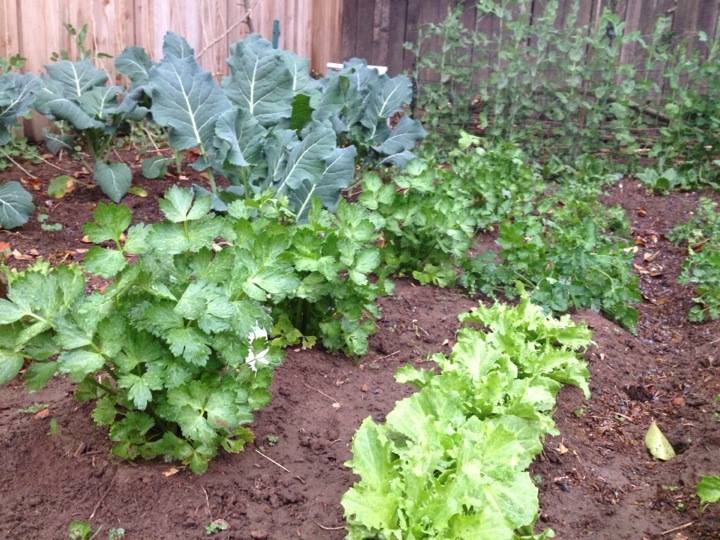
California has been in dire need for more rain and snowfall to help avert a crisis drought situation, so you can imagine how happy we’ve been to receive rain in the course of this past week.   With a 90 percent chance of more rain this weekend, we and our garden have been rejoicing.  I still intend to chant and shake my rain stick until the first of March.

Dry farming is used among a growing number of Californian farmers and vintners, and I’m inclined to put the practice into action. The Center for Agroecology and Sustainable Food Systems at UC Santa Cruz teaches dry farming techniques to students and dry farms tomatoes, winter squash, dry beans, apples, and apricots.    Allowing generous spacing and moderate irrigation after transplantation is recommended to encourage the roots of the plant to drive its roots down into the soil and is key to the success of the technique.

Still, the sound of a light and steady rain falling is music to my ears.  And the garden rejoices.

~T.

The Art of Conservation: Drought Emergency in California

Sacramento CA

A twenty percent reduction in water consumption was issued last week by Governor Jerry Brown in response to the drought emergency that has been declared for the state of California.   Being the heathen that I am, briefly showering every other day is normal for me so I doubt that I will feel imposed on if we are asked to sacrifice bathing. We’ve already begun capturing excess water to use on the garden. Numerous churches and religious leaders are hoping that prayers for precipitation will be heard and responded to, and even I have been dancing, chanting, and shaking my Native American Rain Stick everyday in hopes of a positive response from nature.

There is a risk that approximately 200,000 acres agricultural land in the Central Valley will not be planted as a result of the drought.  To further complicate the impact that a dwindling water supply is having on farmland that produces about 45 percent of the nation’s fruits and vegetables, the Sacramento-San Joaquin Delta is on the verge of collapse.  The Delta is a critical part of the state’s water supply from Silicon Valley to San Diego.   It is estimated that 30 percent of Southern California’s water supply moves across the 700,000-acre Delta, the largest estuary on the West Coast of the Americas and home to 750 distinct species of plants and animals.

Invasive species, pollution and the destruction of most of the area’s wetland and river habitat due to existing water-supply operations continue to have profound impacts on the Delta.  The natural direction of the rivers flowing out of the Delta have been reversed and as a result of water conveyance systems and other issues, several native species are on the brink of extinction.  A sustainable path forward in the Delta must be insured or the continued ecological collapse of the estuary will result in further reductions in water supply for California cities and agriculture.

There is a proposed plan to build two massive twin tunnels under the delta to divert Sacramento River water around the Bay/Delta estuary for distribution to San Joaquin Valley agribusiness and Southern California cities and suburbs.  The monetary costs could range above $69 billion, and the irreparable damage to the environment?  Astronomical.    Seems to me that there isn’t enough water in California to justify the destruction.   Are we not wise enough to realize that creating a resilient water distribution system based on recycling, conservation and the development of local supplies is more worthy of consideration?  The Environmental Water Caucus’ Responsible Exports Plan provides sustainable solutions that are more economical and less taxing on California’s rivers and bays.  The science and common sense applications that are demonstrated in the report conclude that:

…”The combination of water efficiency solutions and reduced reliance on the Delta that are recommended obviate the need for increased surface storage and increased conveyance through the Delta.  Water efficiency actions can provide California with the largest increment of future water supply that is currently available to us; the solutions will also provide ample water supplies for population growth, agricultural and industrial growth, and for improving the conditions of our natural landscapes.”

Conservation really is a work of art.  I have started a mixed media series of the Sacramento-San Joaquin River Delta and should any of the work sell, ten percent of the profit will be donated to a conservation program of the collector’s choosing.
Please leave a comment if you are interested in supporting the effort.

~T.
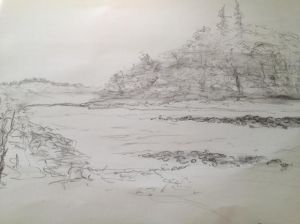
American River
American River – Pencil on Paper – 8 x 11 ” © 2014, Theresa Funk